Department of Entrepreneurship and Innovation

Department of Entrepreneurship and Innovation

The Department was established in 2002 under the former Faculty of Entrepreneurship and Business Administration. It was later renamed the Department of Entrepreneurship and Innovation  in 2022 following the restructuring of the faculty into two separate entities: the Faculty of Entrepreneurship and Small Business Management (FESBM) and the Faculty of Business Administration (FOBA).

Dept Vision

To be a leading centre of excellence in entrepreneurship, innovation, education, and research.

Dept Mission

To empower current and future entrepreneurs by creating and delivering cutting-edge knowledge and research in entrepreneurship and innovation

Message from HOD

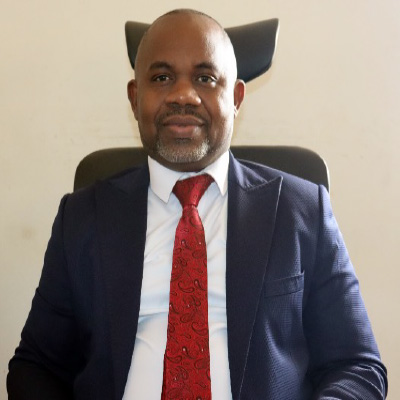
Welcome to the Department of Entrepreneurship and Innovation, part of the Faculty of Entrepreneurship and Small Business Management (FESBM) at Makerere University Business School. The Department is committed to delivering high-quality entrepreneurship and innovation education that nurtures a new generation of entrepreneurs and intrapreneurs capable of making strategic decisions to drive sustainable organizational success. Our efforts align with Uganda’s development agenda, particularly the goal of achieving middle-income status by 2040 through a private sector-led economy. The National Development Plan IV emphasizes the need for entrepreneurial skills to support private sector growth, underscoring the importance of training an elite cohort of entrepreneurs. We are proud of our experienced academic team, many of whom bring over 15 years of expertise from both academia and industry. The Department offers a range of academic programs, including a Ph.D. in Entrepreneurship, a Master’s in Entrepreneurship and Innovation, a Bachelor’s in Entrepreneurship, and a Diploma in Entrepreneurship and Small Business Management. All our curricula are industry-relevant and designed to bridge the gap between academic knowledge and the practical skills required in today’s dynamic business environment. As part of the Bachelor of Entrepreneurship program, we also run a structured mentorship and coaching program aimed at supporting learners in starting and managing sustainable businesses. To enforce this, we also organize industrial visits that expose students to real-world business operations. We maintain strong partnerships with entrepreneurs and public sector institutions to enrich the learning experience. In addition to teaching, the Department pursues a robust research and development agenda focused on advancing knowledge in entrepreneurship and innovation. Department-led research teams regularly develop proposals that receive funding to explore key issues in the field. These research outputs contribute to policy review and development across both public and private sectors.


Staff Members

Publications

  1. Walugembe, A., Mutebi, H., Tweyongyere, M., & Kusemererwa, C. (2023). Compliance with Quality Standards, Firm Ethical Orientation, and Usage of Locally Made Products in Uganda. ORSEA JOURNAL13(1).
  2. Kusemererwa, C., Munene, J. C., Laura, O. A. and Balunywa, J. W. (2020), “Individual learning behavior: do all its dimensions’ matter for self-employment practice among youths in Uganda?”, Journal of Enterprising Communities: People and Places in the Global Economy, Vol. 14 No. 3, pp. 373-396.
  • Bashir, H., Kusemererwa, C., Sekakubo, J., Ntayi, J. M., & Ngoma, M. (2017). Stakeholder Involvement and Performance of Poverty Eradication Projects in Uganda: A Study of NAADS Projects in Mukono District. ORSEA JOURNAL, 4(1).

Ongoing publication

  1. Navigating the business landscape in an emerging market – The Journey of RENA Beverage Solutions. Manuscript under revision for submission to Emerald Emerging Markets Case Studies.
  2. Social capital and Self-employment practice among the youths: The mediating role of Business self-efficacy in the developing country context. The manuscript is complete and ready for submission.
  3. Business self-efficacy dimensions: Do they all matter for self-employment among the youths in developing economies? The manuscript is complete and ready for submission.

Kituyi, G. M., Abaho, E., Aguma, D., Nkambwe, I., & Beronda, J. (2024). Improving access to communication services by the unserved and underserved communities in Uganda through information and communication         technologies. Universal Access in the Information Society, 1-10.

 Abaho, E., Aguma, D., Beronda, J., Nkambwe, I., Obang, H., & Kituyi, G. M. (2024). E-Booster Uganda: towards an inclusive digital economy in Uganda through provision of ICT services to the underserved and unserved communities. Universal Access in            the Information Society, 1-10.

 Sirajje, Y., Abaho, E., Nsereko, I., Basalirwa, E. M., Muhammed, N., & Balunywa, J. W. (2024). Generational persona and entrepreneurial behavior among millennial entrepreneurs: the mediating role of adaptability tendencies. Management Matters, 21(2), 143-163.

  1. Ocen, S., Elasu, J., Aarakit, S. M., & Olupot, C. (2025, March). Artificial intelligence in higher education institutions: review of innovations, opportunities and challenges. In Frontiers in Education(Vol. 10, p. 1530247). Frontiers Media SA.

Aarakit, S. M., Ntayi, J. M., Wasswa, F., Buyinza, F., & Adaramola, M. S. (2024). Conceptualization and antecedents of productive use of electricity: A systematic literature review. Cleaner Engineering and Technology, 100747.

Muwanga, R., Ssekakubo, J., Nalweyiso, G., Aarakit, S., & Kusasira, S. (2024). Do all forms of public attitudes matter for behavioural intentions to adopt solar energy technologies (SET) amongst households? Technological Sustainability3(1), 96-112.

Ssennono, V. F., Ntayi, J. M., Buyinza, F., Wasswa, F., Adaramola, M. S., & Aarakit, S. M. (2023). Climatic shocks and multidimensional energy poverty in Ugandan households: does women empowerment play a moderating role? International Journal of Sustainable Energy42(1), 103-127.

Tindiwensi, C. K., Kabahinda, E., Aikiriza, F., & Aarakit, S. (2023). Entrepreneurial passion and entrepreneurial farming among youth agripreneurs in Uganda. SN Business & Economics3(7), 123.

 Aarakit, S. M., Ntayi, J. M., Wasswa, F., Buyinza, F., Adaramola, M. S., & Ssennono, V. F. (2022). The role of financial inclusion in adoption of solar photovoltaic systems: A case of Uganda. Renewable Energy, 198, 984-998.

Collaborations

Downloads

Contact Information

We are eager to hear from you. Please fill in your contact information and one of our staff members will contact you shortly.

MORE UNIVERSITY UNITS

Scroll to Top